Environmental performance is becoming an increasingly important consideration alongside quality, cost and technical capability. Customers are looking for suppliers to provide reliable sustainability data that supports procurement decisions and wider supply chain reporting.
Providing that information requires more than simply producing a product carbon footprint figure. It requires confidence that the data has been generated using a robust and consistent methodology. And it’s this principle that has shaped our approach to product carbon footprinting.
Why we invested in Life Cycle Assessment
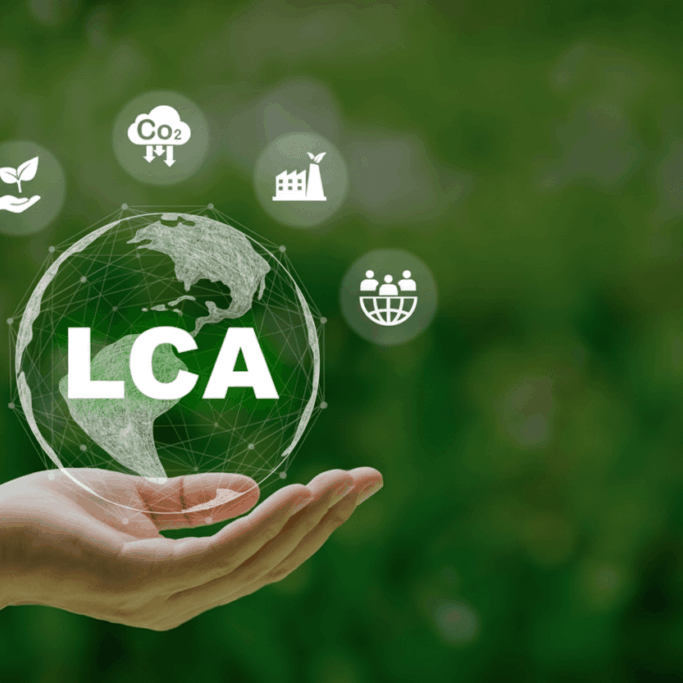
The development of our proprietary dynamic Life Cycle Assessment tool was driven by increasing demand for reliable environmental data alongside our own commitment to better understanding the carbon impact of our products.
Working with specialist carbon consultancy MyCarbon, we’ve developed a scalable capability that enables product-specific carbon footprints to be calculated consistently across our portfolio. Rather than relying on broad assumptions or generic industry averages, the tool uses our own formulations, manufacturing processes and supplier information wherever possible to create a more representative understanding of environmental impact.
This approach was recognised in the Manufacturing Supplier Innovation Awards UK 2026, where Base Materials received the award for Most Innovative Provider of Sustainable Materials.
Measuring carbon is only part of the story
The tool uses a consistent cradle-to-gate methodology aligned with ISO 14067, ISO 14044 and the GHG Protocol Product Standard. Generating accurate data is only the first step. Communicating that data responsibly is equally important.
Carbon footprint figures can easily be misunderstood if system boundaries, assumptions and methodology are not explained clearly. Transparency gives our customers confidence that they are making fair comparisons and informed decisions.
Consistency also supports continuous improvement. By measuring products using the same methodology across the portfolio, we’re able to identify carbon hotspots, monitor progress over time and evaluate opportunities to reduce environmental impact throughout innovation.
Supporting customers beyond compliance
The value of product-level carbon footprinting extends well beyond sustainability reporting. Customers increasingly require detailed environmental information to support Scope 3 reporting, material selection and procurement decisions.
Perhaps more importantly, reliable environmental data enables better collaboration. It supports more informed technical discussions around material selection, carbon impact and product development while helping customers understand environmental performance alongside cost, quality and technical capability.
Internally, the capability also supports continuous improvement by identifying carbon hotspots earlier in product development and making environmental considerations part of our R&D process rather than a separate compliance exercise. As sustainability requirements continue to evolve, robust product-level carbon data will become an increasingly valuable part of engineering partnerships and supply chain collaboration.
OTHER NEWS